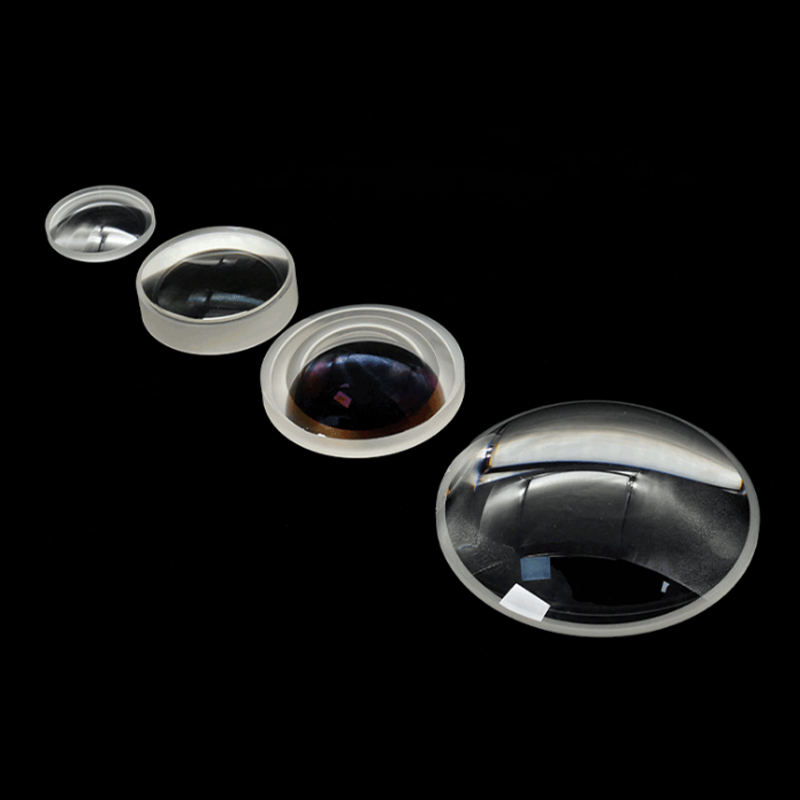


In precision optical systems, the path of light is like the gears of a finely tuned clock. Every minute angular deviation can trigger a chain reaction, ultimately leading to imaging distortion, measurement errors, or even system failure.
In laser beam expander systems, concave lenses, through their synergistic effect with convex lenses, optimize the beam divergence angle and increase the beam diameter.
From single lenses to multi-lens groups, from spherical to aspherical surfaces, from simple coatings to multi-layer optical films, aberration correction technology for convex lenses has been continuously evolving.
The mathematical relationships in convex lens imaging are not only the foundation of optical theory, but also the support for the development of modern optical technology.
In the precise order of the optical world, the path of light is not always a straight line.
In modern optical systems, convex lenses—as one of the most fundamental and widely used optical spherical lenses—continue to play an irreplaceable role in numerous high-precision fields such as scientific research, industry, medicine, and communications,